

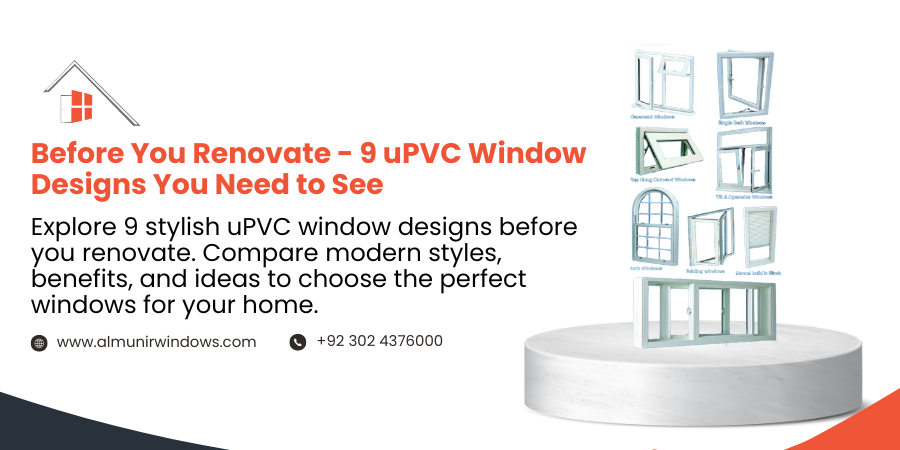
When it comes to home renovation, it can be the perfect time to review design choices that were not thought about during the new home construction process none more than windows. Although often overlooked when thinking about improvements, windows can significantly affect a property’s energy efficiency, style, and maintenance demands.
Contact with Al Munir Windows for best Quality design in all over Pakistan.
Here are the Design of uPVC Windows.
1. Casement Windows
Despite the fact that casements are one of the most versatile window styles and have performed well over the years, they are still one of the most commonly specified uPVC window types. Hinged on one side and opening outward, they provide unobstructed views, strong ventilation control, and consistent thermal efficiency across a variety of room types.
2. Sliding Sash Windows
It is a vertical sliding window design, similar to wooden sash window character and mainly used for old buildings. It provides the authenticity of traditional design, yet with the low maintenance and energy use of modern uPVC construction.
3. Tilt and Turn Windows
Tilt and turn windows provide a double benefit: a secure tilted position to provide controlled ventilation, and a complete opening window (100%) for cleaning or emergency escape. This design is particularly convenient for upper floor rooms and properties where maintenance access is restricted.
4. Bay and Bow Windows
The bay and bow extend the building’s facade outwards to create more space for activities and better lighting inside. These designs are often incorporated to add character to the architecture, aesthetic appeal to living and dining spaces.
5. Fixed (Picture) Windows
If venting is not an essential need, then fixed windows are a cost-effective option to let as much natural light and views in as possible. They are often used in conjunction with opening windows that open side-by-side for a sense of balance, light, and aesthetics.
6. French Casement Windows
Casement windows open outward in pairs with no center sash and make a much wider opening than sash windows do. This design works best in rooms that look onto the garden, orangeries, and places where it is important to create a seamless connection between the interior and exterior.
7. Louvre Windows
Louvre windows have horizontal slats that move together so that a continuous flow of air can pass through, yet only a small amount of rain is able to get in. This design works best in bathrooms, utility rooms or warmer climates where vent is key.
8. Arched and Shaped Windows
Custom shaped windows (arches, circles, polygons, etc.) can provide more architectural expression in hallways, stairwells and feature walls. These designs can be used more selectively to enhance the overall look of a property.
9. Foil-Finished and Colored Frames
uPVC frames now can be manufactured to look like natural wood or be treated with a variety of modern colours, such as anthracite grey and matte black. The advancements have allowed the property owners to deliver all the benefits of uPVC (durability and low maintenance) with a premium aesthetic.
Key Considerations Before Renovating
When evaluating window design options, the following factors should inform your decision:
- Energy Efficiency — Frame profile and glazing specification have a direct effect on the frame thermal performance and heating cost.
- Natural Light — Window shape, size, and placement significantly affect interior lighting and perceived space.
- Maintenance Requirements — uPVC pipes are a low-maintenance material, but the complexity of the design can affect the long-term maintenance.
So Contact with Al Munir and get more info!